R&D and Innovation.
We use measurement, modelling and design development to investigate engineering problems that need more than a standard solution.
Research applied to building services
Our research and development work grows out of practical questions: how to cool a venue without disrupting a performance, how to understand its actual electrical demand, or how to adapt an existing heat network for heat pumps.
We compare options, examine the limits of the available information and refine the design as we learn. The examples below describe work undertaken by our mechanical, electrical and technology engineers.
Air distribution in large venues
The engineering question
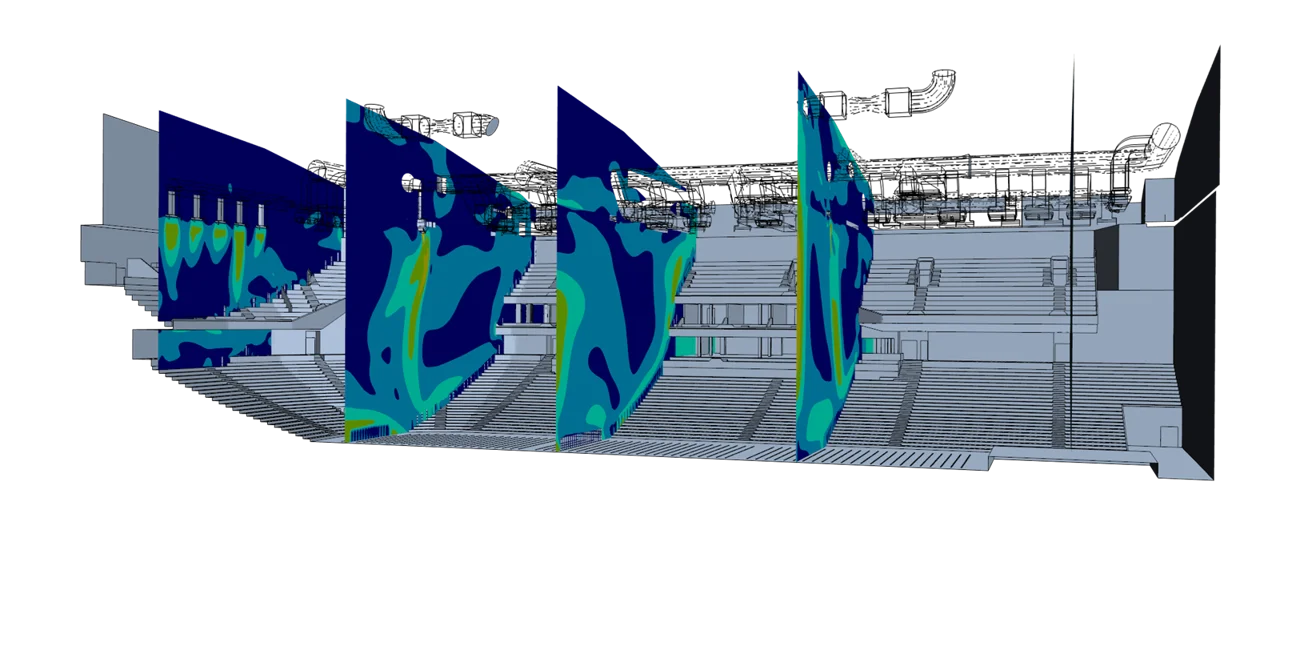
Changes to an arena’s roof structure altered the available space for air-handling units and ductwork. The ventilation design needed to distribute air across the occupied space within the revised geometry.
Our work
We used computational fluid dynamics (CFD) to investigate a linear air-distribution arrangement, with air-handling units positioned within the roof trusses. We modelled different nozzle locations, discharge velocities and diffuser arrangements, then refined the ductwork and plenums to improve control of the air jets.
What it informed
The work developed the proposed ventilation design and its adjustment options. The modelling assessed air movement and temperature distribution before installation.
Cooling around theatrical effects
The engineering question
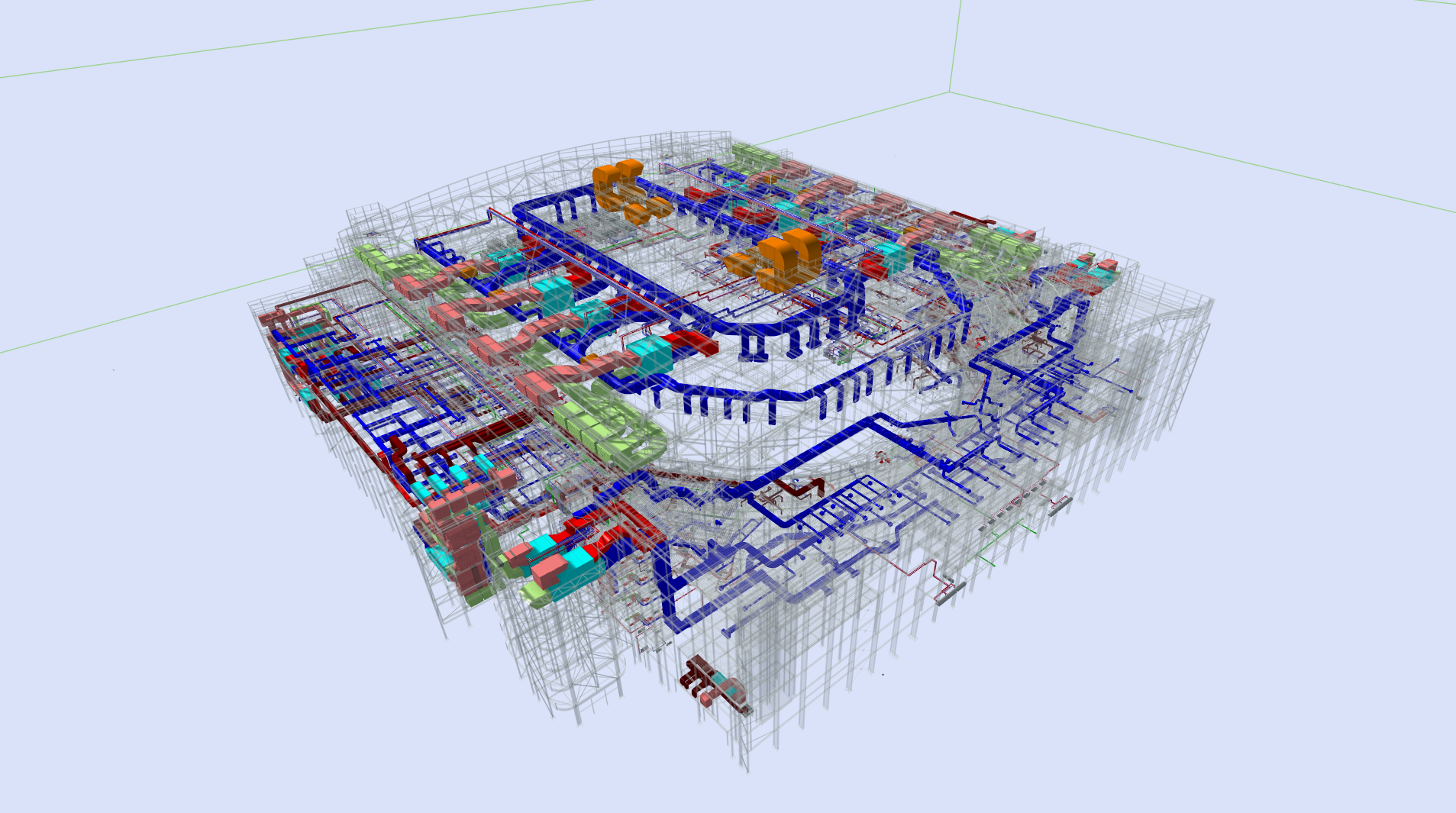
A theatre combined heat-producing equipment above the audience with projected effects that depended on controlled air movement. A conventional high-level supply risked disturbing those effects, while low-level displacement ventilation alone could not address the equipment heat loads.
Our work
We investigated a hybrid system combining local high-level cooling with displacement ventilation in the audience areas. We modelled how the cooling load could be shared between the systems under different production conditions and developed controls to respond to the resulting temperature distribution.
What it informed
The work established a way to balance equipment cooling and audience comfort while limiting air movement in the areas used for visual effects. It also addressed the risk of overcooling when high-level return-air temperatures were used to represent conditions below.
Measuring event electrical demand
The engineering question
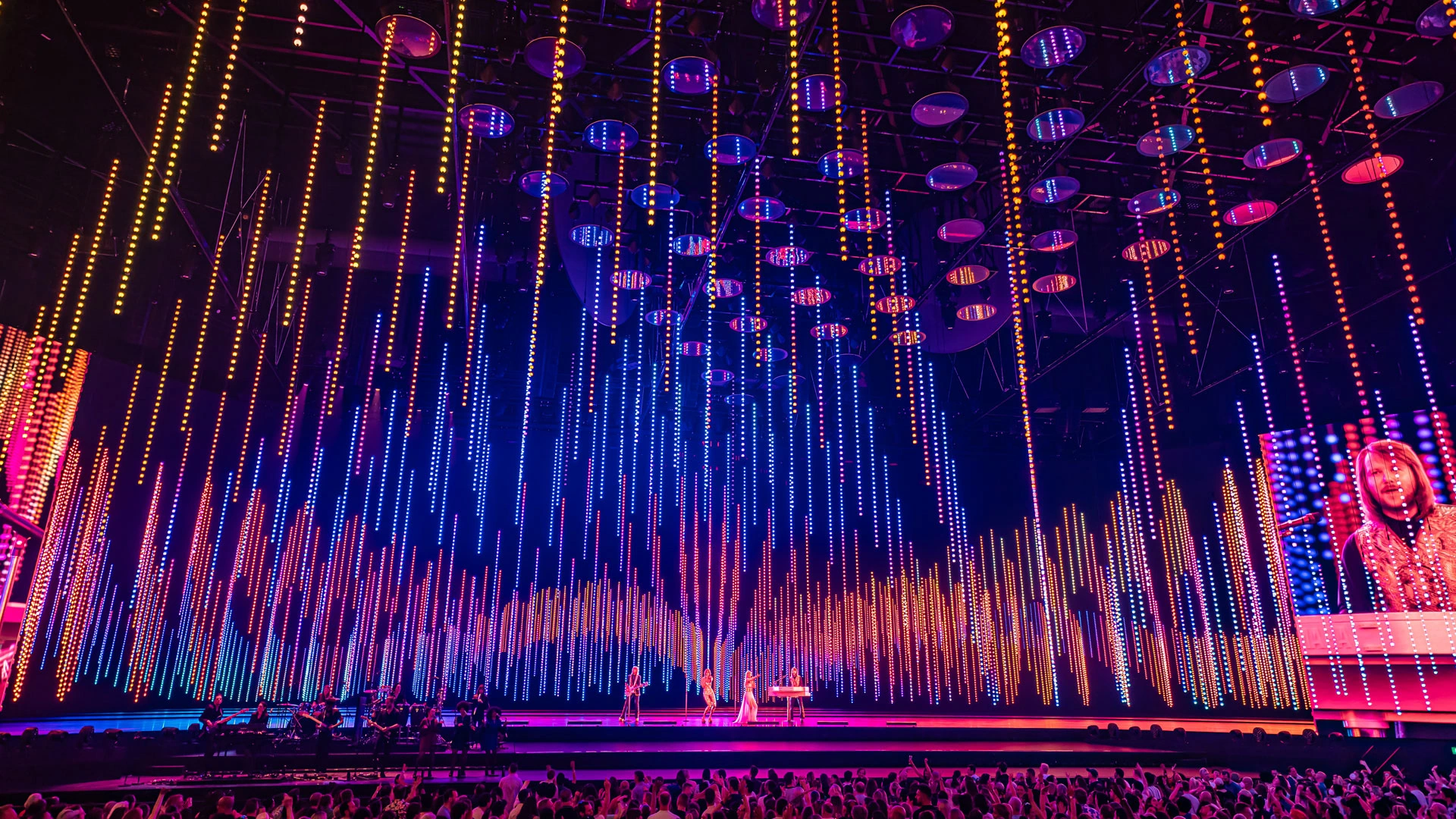
Power allowances based on maximum equipment ratings can obscure how LED screens actually operate during events. This makes it difficult to establish whether existing venue supplies can support temporary installations.
Our work
We developed a metering and analysis approach for LED screens and venue electrical loads. Measurements taken during events and separate tests were brought together in a cloud-based system to compare demand profiles across venues and operating conditions.
What it informed
The measurements informed assessments of connection to existing electrical supplies and the potential use of battery storage where capacity was constrained. This provided a basis for evaluating alternatives to temporary diesel generation, with each venue assessed against its available capacity.
Adapting existing heat networks
The engineering question
Heat networks designed around gas or oil-fired plant may rely on temperatures that do not suit efficient heat-pump operation. Existing distribution systems, return temperatures and connected loads can limit the available options.
Our work
We investigated how lower-temperature network sections could work alongside existing components that still required higher temperatures. The work included modelling alternative network arrangements and developing cascading energy-loop concepts to manage the interface between temperature levels.
What it informed
These studies helped establish where existing infrastructure could be adapted and where more extensive changes were needed. The emphasis was on the behaviour of the complete system, rather than replacing the heat source in isolation.
Comparing heat-sharing and local systems
The engineering question
A shared heat network is not automatically the most efficient solution for every site. Its performance depends on the pattern of heating and cooling demand, the available heat sources and the energy used or lost in distribution.
Our work
We compared centralised and decentralised heat-pump arrangements, heat recovery and low-temperature distribution options. Our work considered concurrent heating and cooling loads, waste-heat sources and river-source options, using thermal modelling supplemented by project-specific calculations.
What it informed
The studies informed energy strategies for projects including Aviva Arena, Colworth Park and the Old Royal Naval College. The modelling compared system options and their suitability for each project, helping teams make informed design decisions. These design-stage forecasts provide a basis for future operational performance measurement.
How we investigate
Define the problem
Identify the performance requirements, physical constraints and gaps in the available information.
Measure and model
Use site measurements, thermal modelling, CFD or electrical analysis as appropriate to the question.
Compare and refine
Test alternative arrangements and refine the design, recording the assumptions and limitations.
Apply the findings
Use the results to inform system selection, design details, controls and further investigation.